




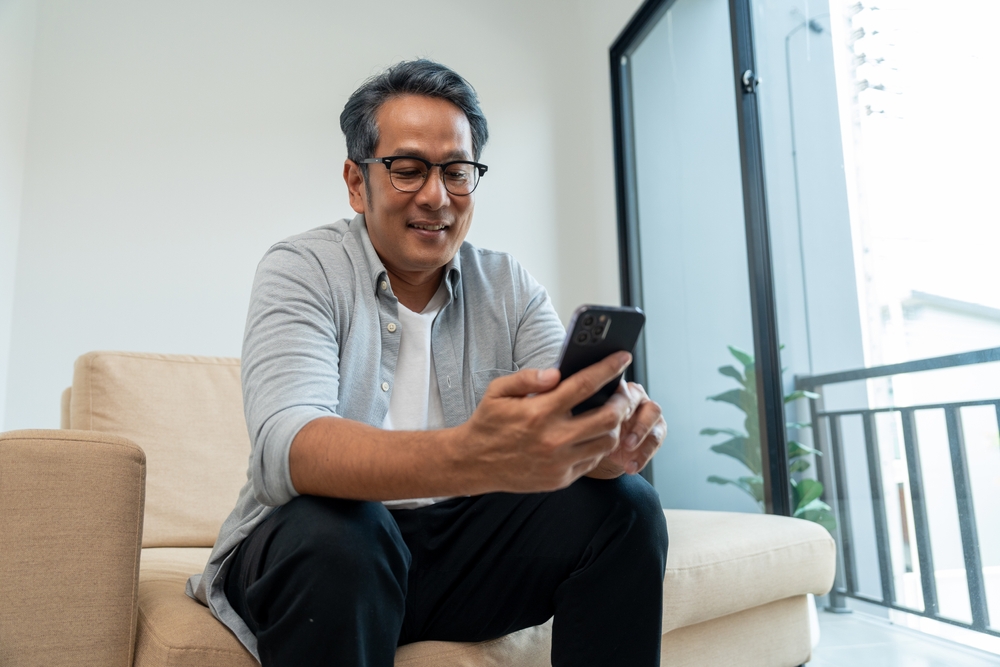
Summary: One of the most common questions people ask before entering drug and alcohol treatment is whether they can keep their phone. At most rehab facilities, the answer is no. Phones are confiscated at intake, and patients are cut off from the outside world for 30, 60, or 90 days. Crosspointe Recovery in the Sherman Oaks area of Los Angeles takes a different approach. Our facility allows cell phones, computers, laptops, and internet usage on a case-by-case basis, evaluated by the clinical team based on each patient’s needs and treatment goals. We believe that complete digital isolation is not necessary for effective treatment and can actually create barriers that prevent people from entering rehab in the first place. For working professionals who cannot disappear from their careers, parents who need to stay in contact with their children, and individuals whose support system exists primarily through digital communication, a phone-friendly rehab removes a barrier that keeps thousands of people from getting help each year. Crosspointe Recovery provides medically supervised detox, luxury residential rehabilitation (7 to 90 days), PHP, IOP, and evening IOP in a private, co-ed, pet-friendly, 6-bed facility in Sherman Oaks. Licensed by the California Department of Healthcare Services. Accredited by The Joint Commission. Most PPO, POS, and Open Access insurance plans accepted.
The question “can I have my phone in rehab?” gets searched thousands of times every month. Behind every one of those searches is a person weighing whether they can actually enter treatment without losing connection to everything outside the facility walls.
For many people, particularly working professionals, business owners, parents, and individuals whose primary support comes from long-distance family or friends, a no-phone policy is not just inconvenient. It is a dealbreaker. They choose to delay treatment, try to manage addiction on their own, or avoid rehab entirely because the cost of disconnecting feels too high.
Crosspointe Recovery was built with a different philosophy. We allow cell phones, laptops, and internet access because we believe that recovery does not require total isolation from the real world. It requires structured clinical treatment, evidence-based therapy, medical support, and a safe environment. Not a communications blackout.
Why Most Rehabs Ban Phones (and Why That Model Is Outdated)
The traditional no-phone policy in rehab originated from a reasonable concern: that phones could be used to contact dealers, access triggering content, maintain unhealthy relationships, or distract from treatment. These concerns are valid and should be addressed clinically.
But banning phones entirely is a blunt solution to a nuanced problem. It treats every patient identically regardless of their circumstances. It assumes that the phone itself is the threat rather than the behaviors associated with it. And it ignores the clinical reality that for many patients, maintaining contact with supportive family, managing legitimate professional obligations, and preserving a sense of normalcy during treatment actually supports recovery rather than undermining it.
Research cited by the Substance Abuse and Mental Health Services Administration (SAMHSA) and multiple academic studies has shown that family involvement in addiction treatment improves outcomes. Patients who maintain supportive family connections during treatment have higher completion rates and lower relapse rates. A no-phone policy can inadvertently sever exactly the connections that support recovery.
Americans spend an average of over 5 hours per day on their phones. For younger adults, that number is higher. Expecting someone in the acute stress of early recovery to simultaneously adjust to sobriety, manage withdrawal, engage in intensive therapy, AND adapt to the sudden absence of their primary communication tool adds unnecessary stress to an already overwhelming experience.

How Crosspointe Recovery’s Phone Policy Works
At Crosspointe Recovery, cell phones, computers, laptops, and internet usage are allowed on a case-by-case basis. This means the clinical team evaluates each patient’s situation individually rather than applying a blanket rule.
Clinical boundaries, not confiscation. Rather than taking your phone away, our clinical team works with you to establish healthy boundaries around device use. If certain contacts, apps, or behaviors are identified as triggers or risks to recovery, those specific issues are addressed therapeutically rather than by removing the device entirely. This approach teaches patients to manage technology in the context of recovery, a skill they will need for the rest of their lives because phones do not disappear after discharge.
Professional accommodation. For working professionals, business owners, and individuals with career obligations that cannot be paused for 30 to 90 days, phone and laptop access allows essential work communication to continue. This is a primary reason Crosspointe Recovery also offers an Evening IOP with a Career Track option, designed for individuals balancing recovery and professional responsibilities.
Family connection. Parents staying in contact with their children. Adult children checking on elderly parents. Partners coordinating household logistics. These are not distractions from recovery. They are the real-world responsibilities that, if severed abruptly, create anxiety and resentment that undermines treatment engagement.
Clinical oversight. Phone access does not mean unsupervised, unlimited screen time. Our clinical team monitors how technology use is affecting each patient’s treatment engagement and emotional state. If phone use becomes clinically problematic for a specific patient, the team addresses it directly as part of the treatment plan, the same way they would address any behavior that interferes with recovery.
Who Benefits Most from a Phone-Friendly Rehab?
Working professionals and executives. Crosspointe Recovery’s phone and laptop policy is particularly valuable for professionals who would not enter treatment if it meant going completely off the grid. Combined with our Evening IOP Career Track and luxury private facility, this makes Crosspointe one of the few rehabs in the Los Angeles area where professionals can receive intensive addiction treatment without career disruption.
Parents. A parent’s need to communicate with their children during treatment is not a luxury. It is a clinical reality that affects treatment engagement. A parent who is consumed with worry about their children’s wellbeing cannot fully engage in therapy. Allowing phone contact with children (within clinically appropriate boundaries) reduces this distraction rather than creating it.
Individuals with long-distance support systems. Not everyone’s family lives nearby. For patients whose primary support, parents, siblings, sponsors, sober friends, exists in another state or country, phone access is the only way to maintain those connections during treatment.
Couples in treatment together. Crosspointe Recovery is couple-friendly, allowing partners to enter treatment together. When one partner is at a different level of care or when coordinating logistics for shared responsibilities (children, finances, housing), phone access between partners supports the practical coordination that treatment requires.
Phone-Friendly Does Not Mean Unstructured
Allowing phones does not mean Crosspointe Recovery is less clinically rigorous than facilities that ban them. Our facility is licensed by the California Department of Healthcare Services and accredited by The Joint Commission. Treatment includes medically supervised sub-acute detox, residential rehabilitation (7 to 90 days), CBT, DBT, trauma-informed care, individual therapy, group therapy, family therapy, medication-assisted treatment, and addiction counseling. Our 6-bed private facility in Sherman Oaks provides luxury amenities including chef-prepared meals, yoga, massage therapy, spa services, and private or semi-private rooms. The facility is pet-friendly and co-ed.
The phone policy is one element of a comprehensive, individualized treatment model that meets patients where they are rather than forcing them into a one-size-fits-all framework that was designed decades ago for a world without smartphones.

Frequently Asked Questions About Rehab That Allows Cell Phones
Can I bring my cell phone to rehab at Crosspointe Recovery?
Yes. Crosspointe Recovery allows cell phones, computers, laptops, and internet usage on a case-by-case basis. The clinical team evaluates each patient’s needs and establishes appropriate boundaries around device use as part of the individualized treatment plan. Phone access is managed clinically rather than through a blanket confiscation policy.
Why does Crosspointe Recovery allow phones when most rehabs do not?
Most rehab facilities ban phones as a blanket policy to prevent contact with dealers, access to triggering content, and distraction from treatment. Crosspointe Recovery addresses these concerns through individualized clinical boundaries rather than confiscation. We believe that maintaining contact with supportive family, managing professional obligations, and learning to use technology responsibly within recovery are clinically valuable. Research shows that family involvement during treatment improves completion rates and reduces relapse risk.
Will having my phone in rehab distract me from treatment?
Phone use at Crosspointe Recovery is managed by the clinical team. If device use becomes clinically problematic for a specific patient, the team addresses it directly as part of the treatment plan. The goal is to teach patients to manage technology in the context of recovery, a skill they will need after discharge, rather than eliminating it artificially during treatment and leaving them unprepared for the real world.
Can I use my laptop for work while in residential treatment at Crosspointe Recovery?
Yes, on a case-by-case basis. Crosspointe Recovery recognizes that some patients, particularly working professionals and business owners, cannot completely disconnect from career obligations for 30 to 90 days. Laptop access allows essential work communication to continue within clinically appropriate boundaries. Our Evening IOP also includes a Career Track option for individuals managing recovery alongside professional responsibilities.
Is Crosspointe Recovery’s phone-friendly policy available during detox?
Phone access during detox is evaluated individually based on the patient’s medical status and clinical needs. During the acute phase of withdrawal, medical stabilization is the priority, and phone use may be limited if it interferes with rest, monitoring, or clinical care. As patients stabilize, phone access is expanded according to the individualized plan.
Does allowing phones affect the quality of treatment at Crosspointe Recovery?
No. Crosspointe Recovery is licensed by the California Department of Healthcare Services and accredited by The Joint Commission. Treatment includes medically supervised detox, residential rehab, CBT, DBT, trauma-informed care, individual and group therapy, family therapy, MAT, and addiction counseling. The phone policy is one element of a comprehensive clinical model. It does not replace or reduce clinical rigor.
Does insurance cover treatment at a rehab that allows phones?
Yes. Insurance coverage is based on the clinical services provided (detox, residential treatment, therapy, psychiatric care), not the facility’s phone policy. Crosspointe Recovery accepts most major PPO, POS, and Open Access insurance plans. Medicare and Medicaid are not accepted. Call (888) 615-7589 for free insurance verification.